
The revenue operating system for your company
For founders and CROs at startups under 50 people, psi* replaces CRM, prospecting, sequencing, RevOps automation, attribution, compensation, and financial reporting with one platform. It builds your market, runs Sales and Operations, and turns every outcome into the next revenue action.
psi* revenue operating system market + workflows + revenue model
psi* revenue operating system Product film one connected system
Revenue loop live system
Build your market. Run revenue. Improve every outcome.
Your TAM, customer data, Sales and Operations workflows, people, and AI coworkers stay connected in one operating loop.
MODEL / one commercial modelBUILD / sales + operations appsRUN / people + AI coworkersLEARN / improve the next revenue action
Platform
01
Production sources
02
Replicate and transform
Ontology 03
Operating modules
Ontology is the foundation of the revenue system
The modules your revenue team needs
- Customer Modeling and a composable customer data platform
- Marketing and sales attribution across every recorded interaction
- Revenue reconstruction from every connected financial contract and production source
- Sales compensation credits, earnings, and payout ledgers
- GAAP-ready revenue and investor-grade internal financial outputs with source lineage
How the commercial model stays reliable
- Connect every revenue-relevant source, including contracts, billing, production, CRM, and marketing data
- Reconcile every fact to the same customer model
- Preserve source lineage and immutable history so every number can be traced
- Produce GAAP-ready revenue outputs when every revenue-relevant source is connected
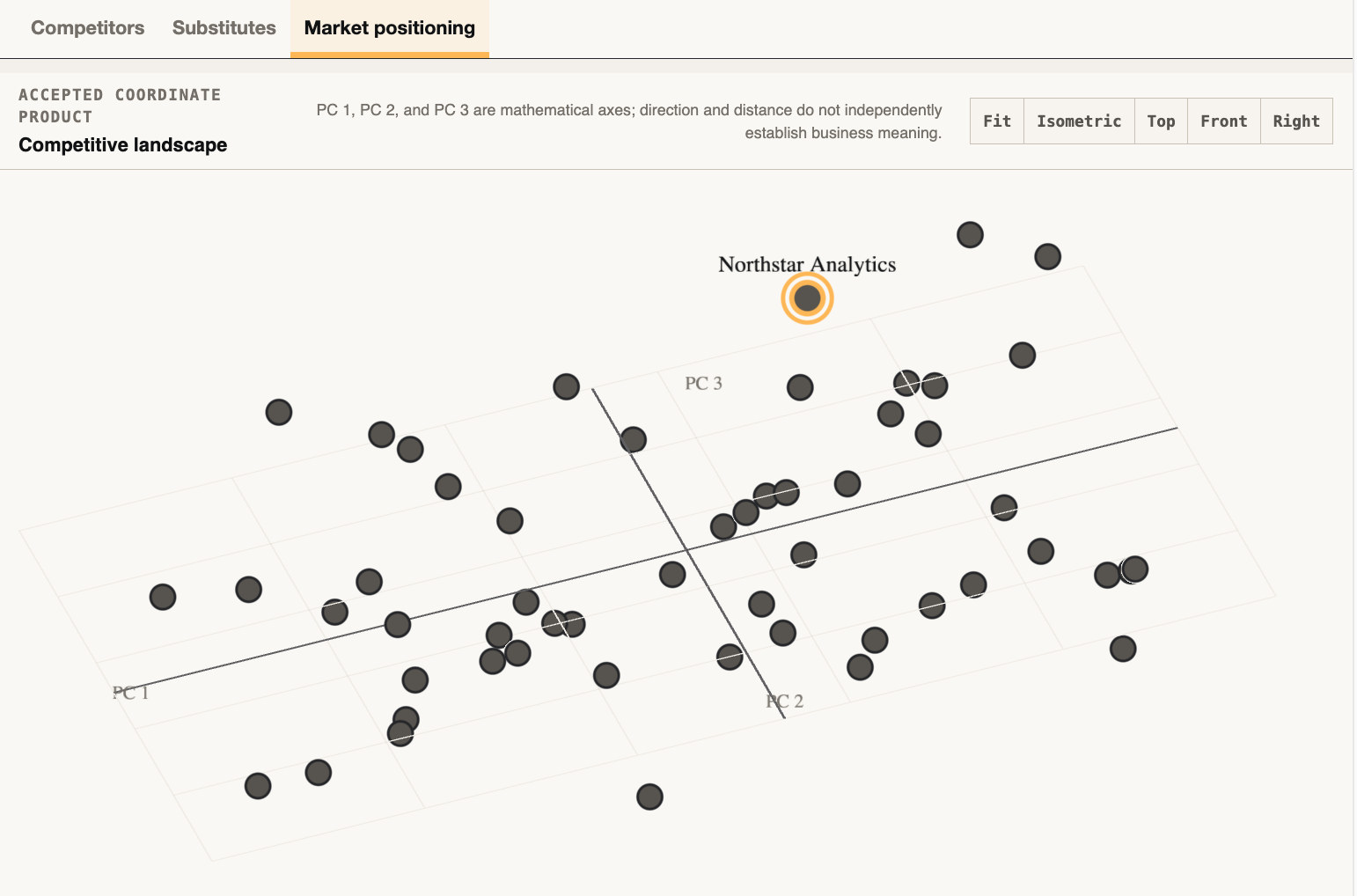
Find the market now—and model where it moves next
Build and activate your TAM
- Start with public information about your company, products, and positioning
- Construct a TAM as large as your market requires
- Source and enrich 3,000+ prospect records per month with account, contact, fit, and signal data
- Assign the highest-signal prospects to the right GTM owner from Day 0
Simulate the next customer map
- Update principal-component scores (PCS) as your company's posture changes
- See which future customers move into or out of your reachable market
- Model how a product, positioning, or business-model change reshapes the TAM
- Use every commercial interaction to improve targeting and acquisition strategy
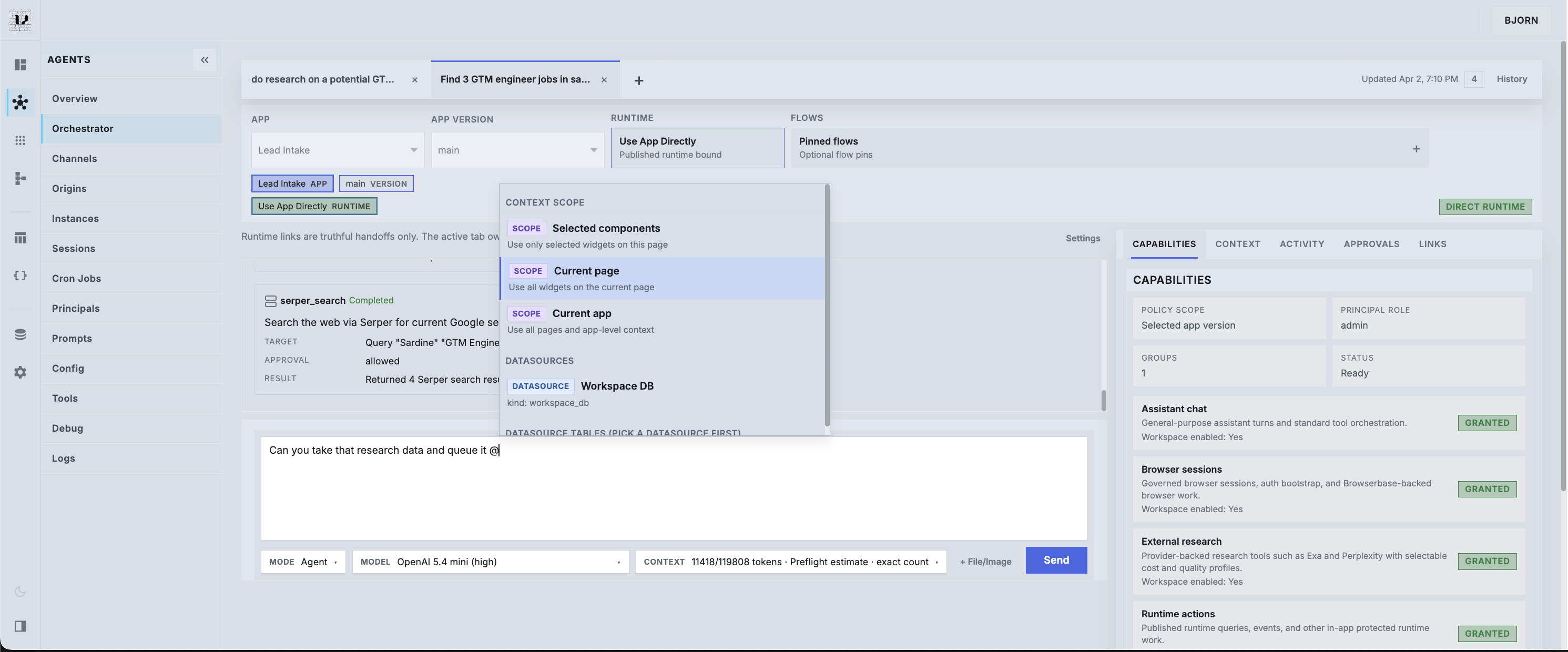
AI coworkers that do real Sales and Operations work
Coworkers can do anything you can do in a psi* app
- Research and enrich accounts before a seller opens the record
- Run prospecting, routing, pipeline, and operational workflows
- Prepare messages, next actions, and account updates for review
- Operate the apps and flows your team already uses inside psi*
How they work
- Call coworkers through Slack or schedules and let them operate asynchronously
- Keep context across channels, accounts, and the apps they are allowed to use
- Use structured queries and scoped data sources to keep each coworker bounded
- Hold high-risk actions for human review with the evidence attached
- Keep tools, writes, and data isolated to your organization and permissions
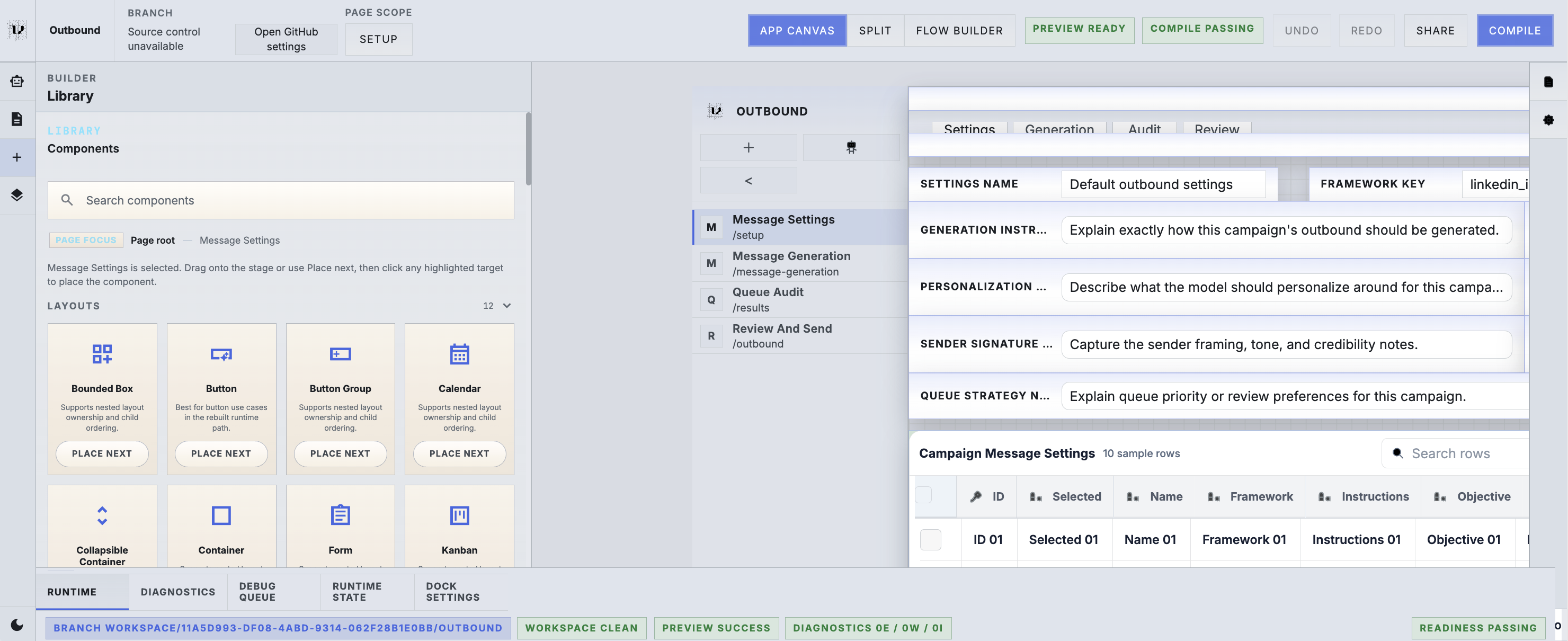
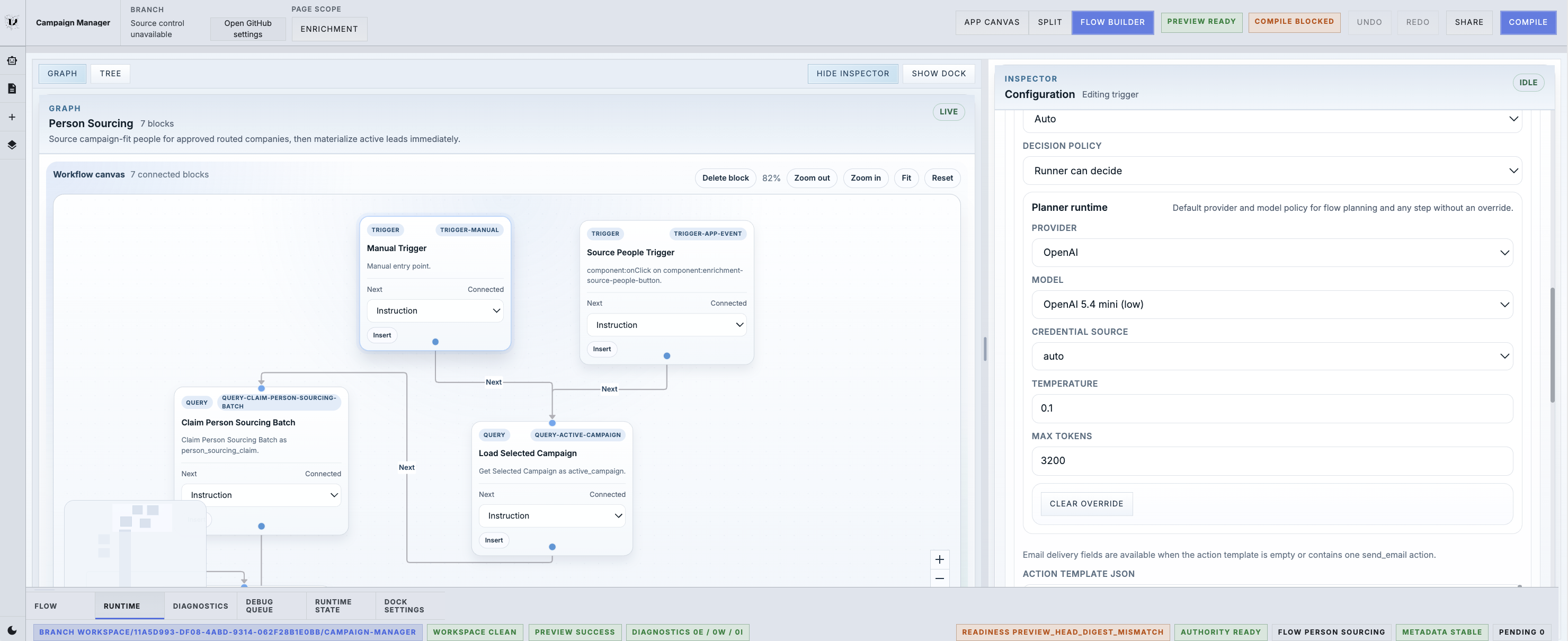
Every app becomes an operating surface for people and agents
Build the work your company actually needs
- Create purpose-built apps for prospecting, sales, RevOps, finance, and other operations
- Run automated sequences across email, LinkedIn, and other outbound methods
- Adapt workflows and sequences as commercial outcomes change
- Compile, preview, and publish without maintaining a separate agent application
One runtime for people and agents
- Humans and agents use the same screens, forms, and approval lanes
- Every app defines what an agent can see, change, and submit for review
- Structured queries and scoped data sources enforce your business logic
- Agents handle intake, routing, review, and follow-up while people make judgment calls
The revenue system gets better as your company operates
Capture the complete commercial history
- Record account signals, messages, meetings, pipeline changes, contracts, and production data
- Connect each interaction to the customer model and the revenue it influenced
- Keep a trusted history of what happened, when it happened, and what changed
Improve the next revenue action
- Rescore the TAM as new fit, timing, and buying signals arrive
- Adapt messages and sequences based on response and conversion outcomes
- Route opportunities using calibrated sales history, rep fit, and capacity
- Keep pipeline, attribution, compensation, forecasts, and financials current
Apps people and agents share
People and agents use the same apps.
Choose an app to see how people do the work, how agents help, and how everyone stays on the same page.
Shared app
CRM
Accounts, contacts, deals, and activity history in one shared workspace.
See the full customer picture, decide what matters next, and update the account in one place.
Brings together the missing context and suggests useful next steps for the person working the account.
- 01 account signal
- 02 deal review
- 03 next action
Stays visible
Changes, ownership updates, and messages stay visible for people to review.
Shared app
Outbound Seller Workspace
Prospecting lists, sequences, call notes, and next steps for each rep.
Choose priority accounts, review the context, and decide which prospects should move forward.
Finds useful company details, drafts a starting point, and keeps the next step ready for review.
- 01 research accounts
- 02 prepare outreach
- 03 review before send
Stays visible
People can review every message and list change before it goes live.
Shared app
Live Selling Companion
Real-time account context, talk tracks, and objection handling during calls.
Keep the customer history, live notes, and next step in view while you are on the call.
Pulls up relevant details, records decisions, and turns follow-up promises into clear tasks.
- 01 open account context
- 02 guide the call
- 03 attach follow-up
Stays visible
The agent helps during the call but never sends or changes anything by itself.
Shared app
Customer Support Inbox
Triage, assign, and resolve tickets with full customer context attached.
See the customer history beside each request and focus the team on the most important work first.
Sorts new requests, gathers the useful details, and drafts a reply for someone to check.
- 01 triage request
- 02 assemble context
- 03 resolve with review
Stays visible
Sensitive changes and customer replies stay with the support team for approval.
Shared app
Returns & Refunds Portal
Submit, review, and approve return requests with automated status updates.
Check the request and customer details, then approve it or send an exception to the right person.
Checks the order details, gathers the facts, and keeps each update with the request.
- 01 verify eligibility
- 02 review exception
- 03 publish status
Stays visible
Refund decisions are clear, reviewable, and saved with the case.
Shared app
Inbound Lead Form
Capture, score, and route inbound submissions to the right rep instantly.
Review good-fit leads, confirm who should own them, and keep the handoff clear from the first form to the first conversation.
Looks up the company, checks whether it is a good fit, and prepares the lead for the right seller.
- 01 capture signal
- 02 score + enrich
- 03 route to owner
Stays visible
People can see and adjust the scoring and routing rules at any time.
Revenue routing
High-signal account routed to the best-fit rep
- 01 Account matches the ICP and current buying criteria
- 02 Historical sales outcomes identify the rep most likely to close
- 03 Territory, capacity, and ownership rules are satisfied
Review match Assign lead
Send every qualified prospect to the rep most likely to close.
psi* scores the account, detects the buying signal, and selects the best owner using your historical sales outcomes, rep fit, and current capacity.
The routing model requires historical sales data and calibration. Once both are in place, every assignment has a clear reason and can be reviewed by your team.
AI-native revenue operating system
managed revenue systemReplace the GTM stack with one revenue operating system.
psi* replaces CRM, enrichment, sequencing, CDP, RevOps automation, attribution, compensation, and financial reporting. Your team gets one operating model, one set of workflows, and one feedback loop from market signal to recognized revenue.
Outcome One operating model. Fewer handoffs.
Point solutions vs psi*
Illustrative monthly software scope for a sub-50-person startup; psi* Basic starts at $1,500 per month.
Point solutions psi*
Systems
Change time
Relative cost
Build and prioritize your market
- Construct and continuously improve your TAM
- Score accounts and assign high-signal prospects from Day 0
Run Sales and Operations
- Operate custom apps, multichannel sequences, and recurring workflows
- Give people and AI coworkers the same operating surfaces
Keep the revenue model current
- Capture every interaction and connect it to pipeline and revenue
- Update attribution, compensation, forecasts, and financials from one model
Book a meeting
Pick a time to talk with psi* about what your team wants to build or replace.